

Package

Bhutan - The Himalayan Happiness Trail

Theme type: Heritage & Culture

About

Thimpu, or Thimphu, is the capital of Bhutan. It lies on the Thimphu River, amidst a green Himalayan valley. The strict government policy restricting “foreign cultural influences” has preserved the traditional Bhutanese way of life in Thimpu. In Thimpu, you will see everybody dressed in traditional Bhutanese garments, and all buildings are built in traditional Bhutanese style, with gracefully arched pagodas.

Unique Experiences

Bhutan, often known as the ‘Land of the Thunder Dragon’ or 'Druk Yul', remains one of the Himalayan region’s last paradises due to its remoteness, stunning mountainous terrain, diverse flora and fauna, and ancient Buddhist monasteries.

This nation of undulating hills and towering cliffs exudes undeniable charm. The mountains are majestic, the forests dense, the people warm-hearted, the air pure, the architecture captivating, the religion profound, and the art exquisite. Like scenes preserved from history, visitors encounter the splendour of this ancient land through its strategic fortresses called Dzongs, myriad ancient temples, monasteries, and stupas scattered across the countryside, prayer flags fluttering atop high ridges, cascading waterfalls like ethereal curtains, and the friendly smiles of its people.

Bhutan, a small kingdom, shares with Nepal the world's highest concentration of mountains and a living Buddhist heritage. Its pristine Himalayan backdrop, abundant flora and fauna, and vibrant Buddhist traditions have made it an increasingly sought-after destination for travellers. Beyond economic benefits, tourism is driving the growth of its service sector, promoting balanced and holistic regional development. To preserve its rich natural and cultural heritage, Bhutan has adopted a deliberate policy of regulated tourism and sustainable development.

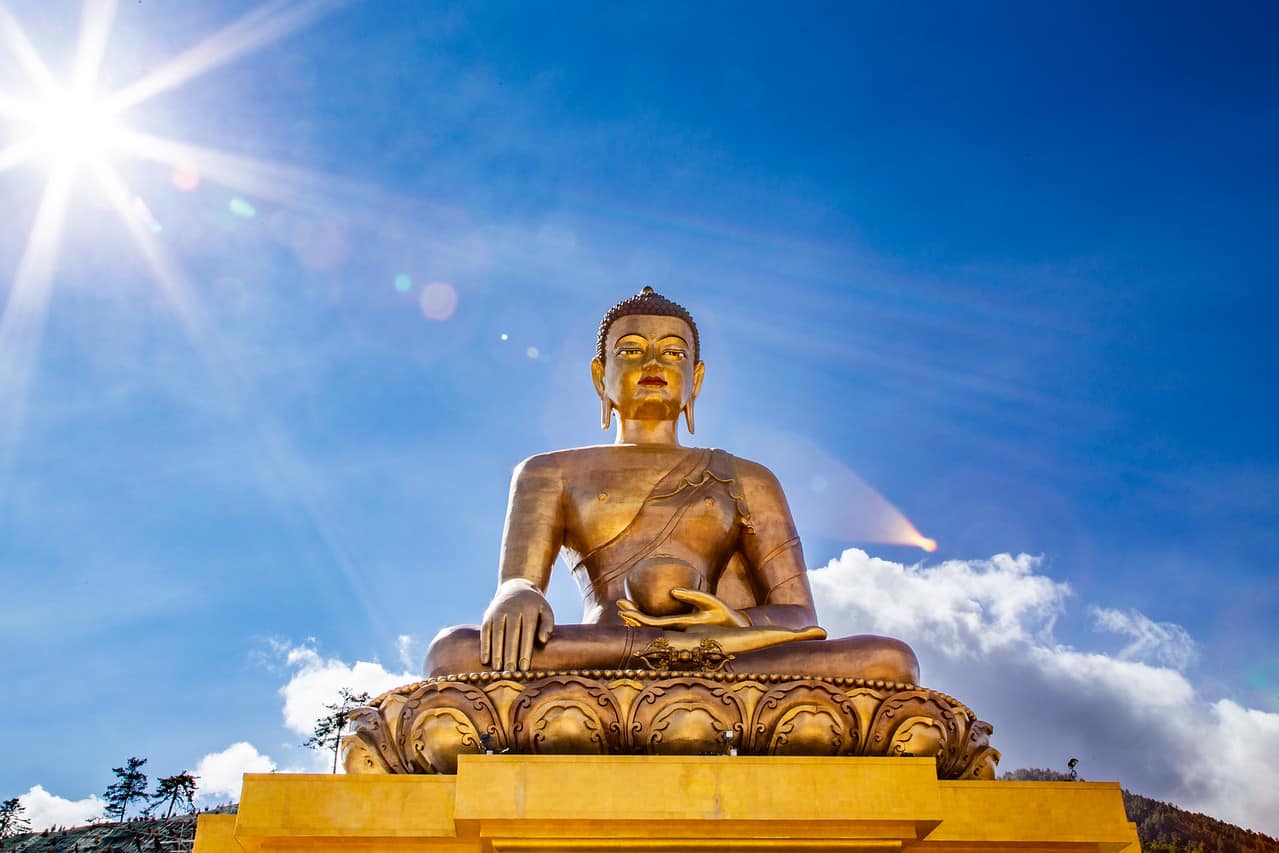
  • Visit the majestic statue of Buddha Dordenma in Thimphu.
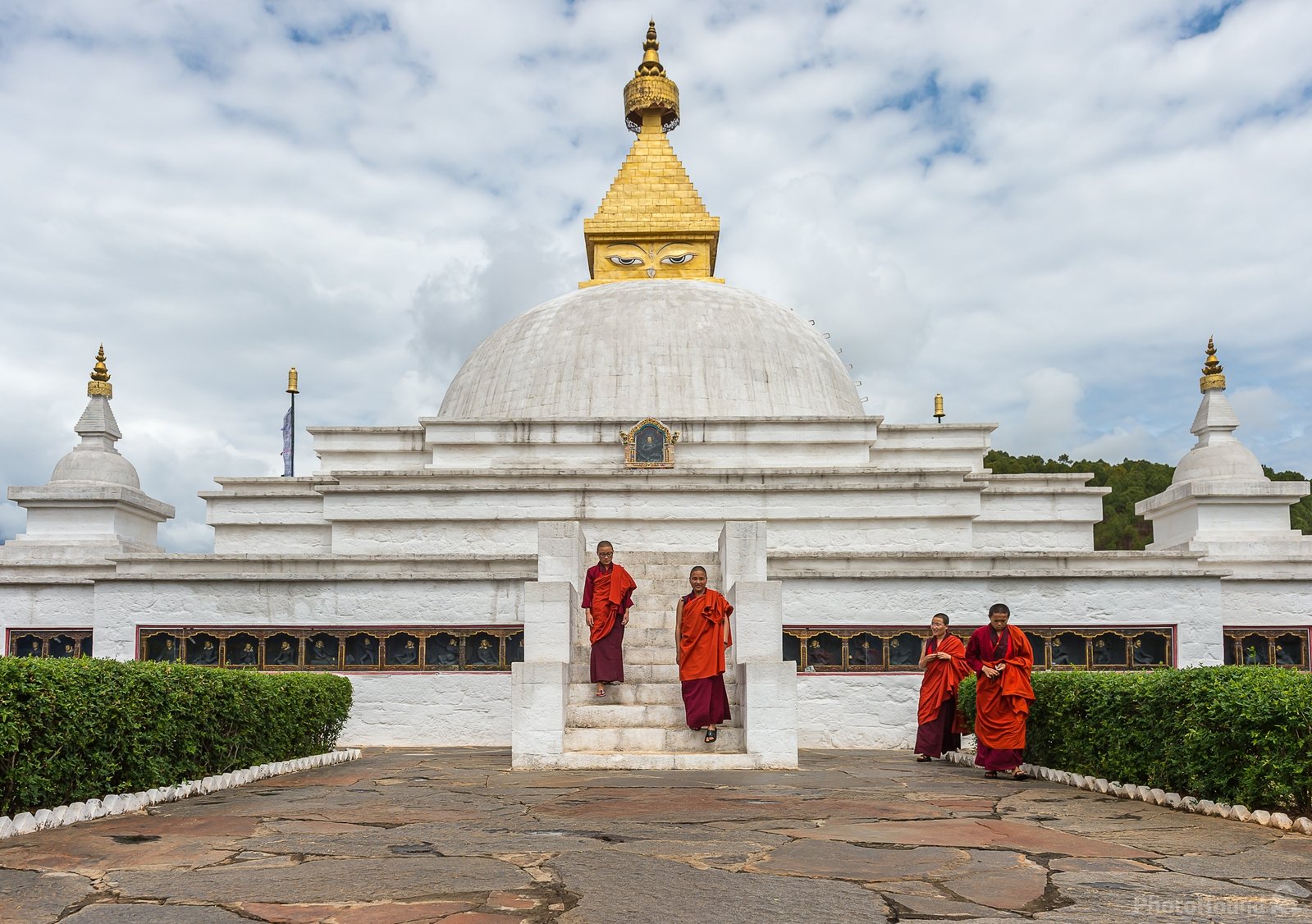
  • Discover the King's Memorial Chortens, where devotees continuously circumambulator, murmuring mantras and spinning prayer wheels.
  • Explore Centenary Farmers Market & Ka Ja Thom.
  • Sangaygang Viewpoint, home to the transmitter tower of Bhutan Broadcasting Services (BBS).
  • Pangri Zampa, a monastery constructed in 1529 by Lam Ngawang Chogyal.
  • Visit to Trashichhoedzong is the center of government and religion.
  • Enjoy breathtaking views from Dochula Pass.
  • Experience journey to Punakha Dzong.
  • A walk across Punakha Suspension Bridge.
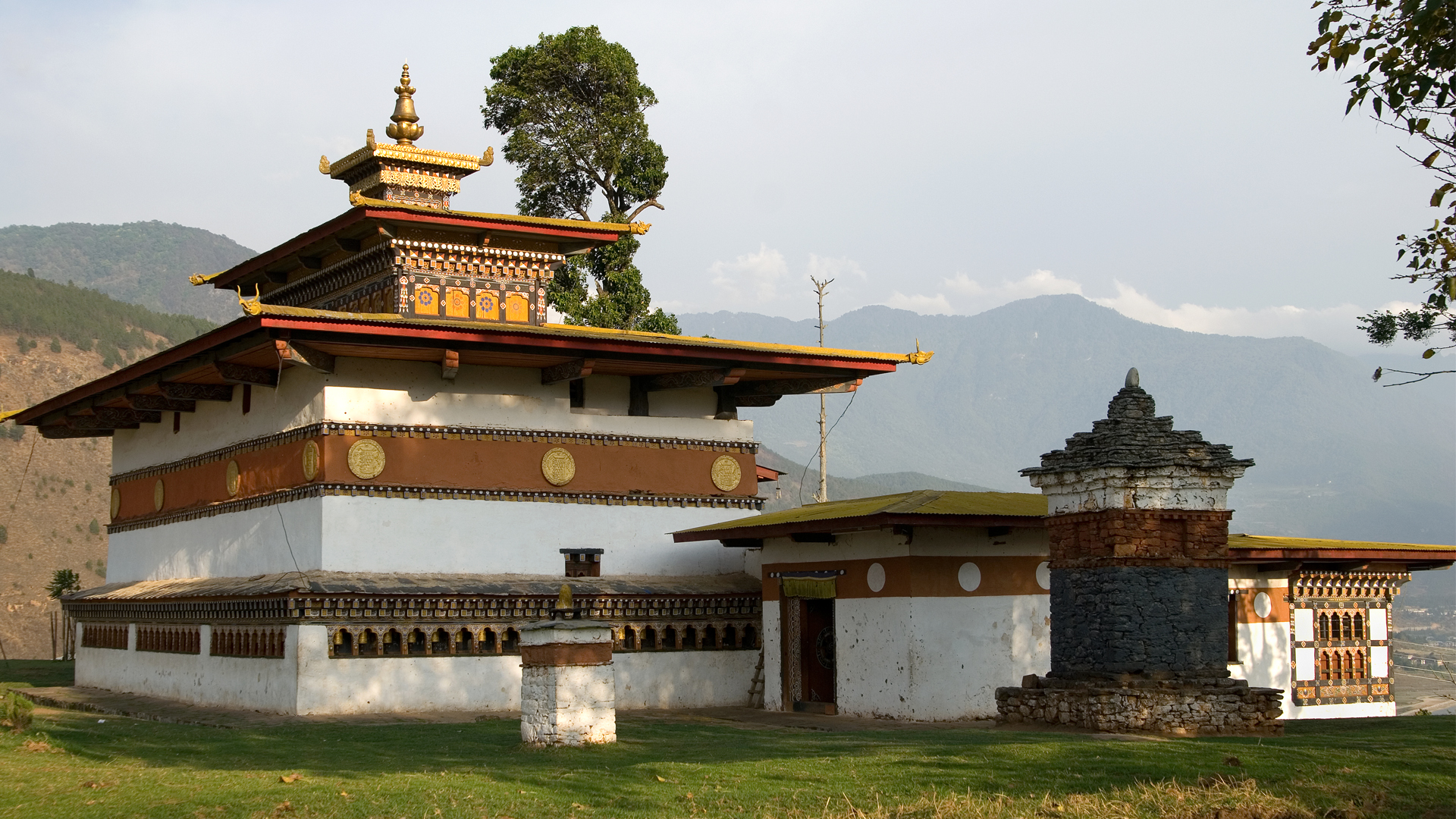
  • Embark on a short and easy walking excursion to Chimi Lhakhang, fertility temple.
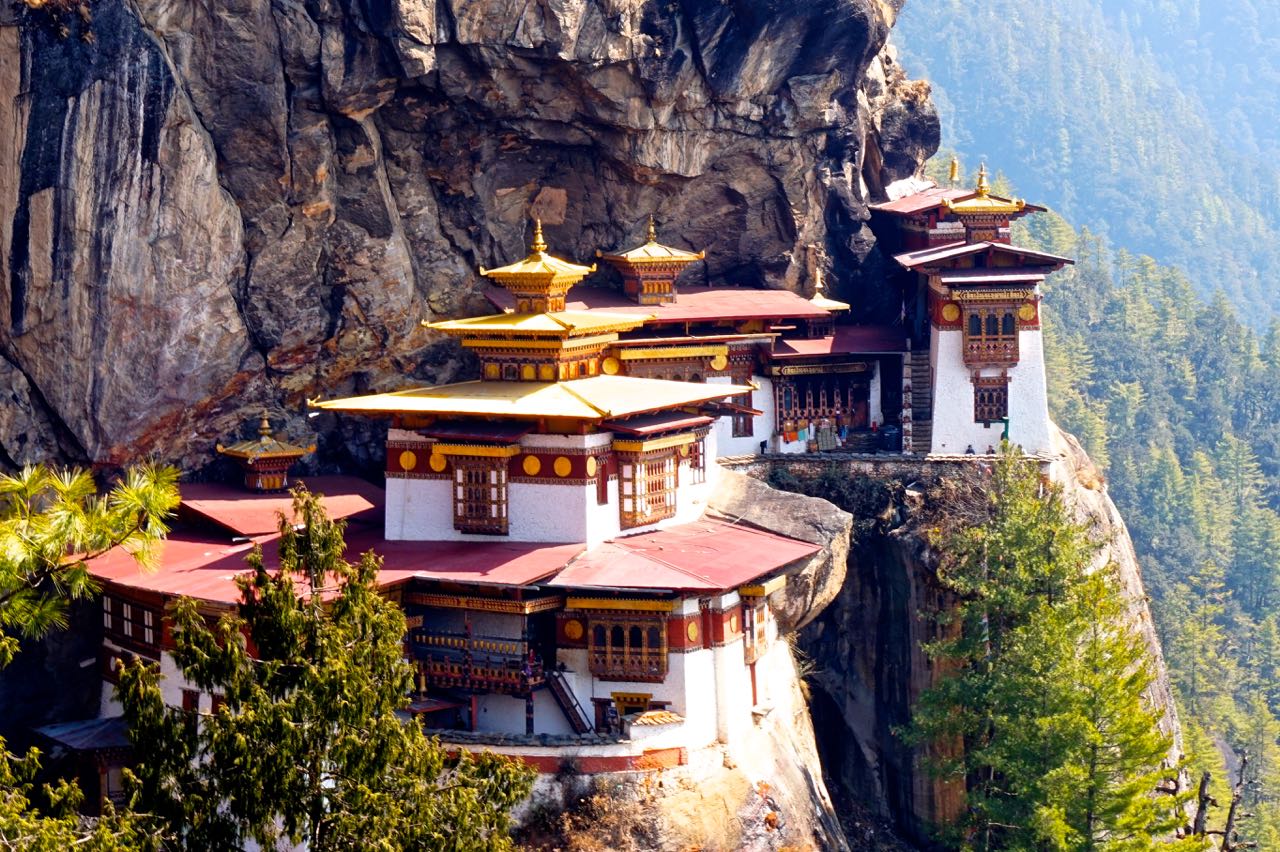
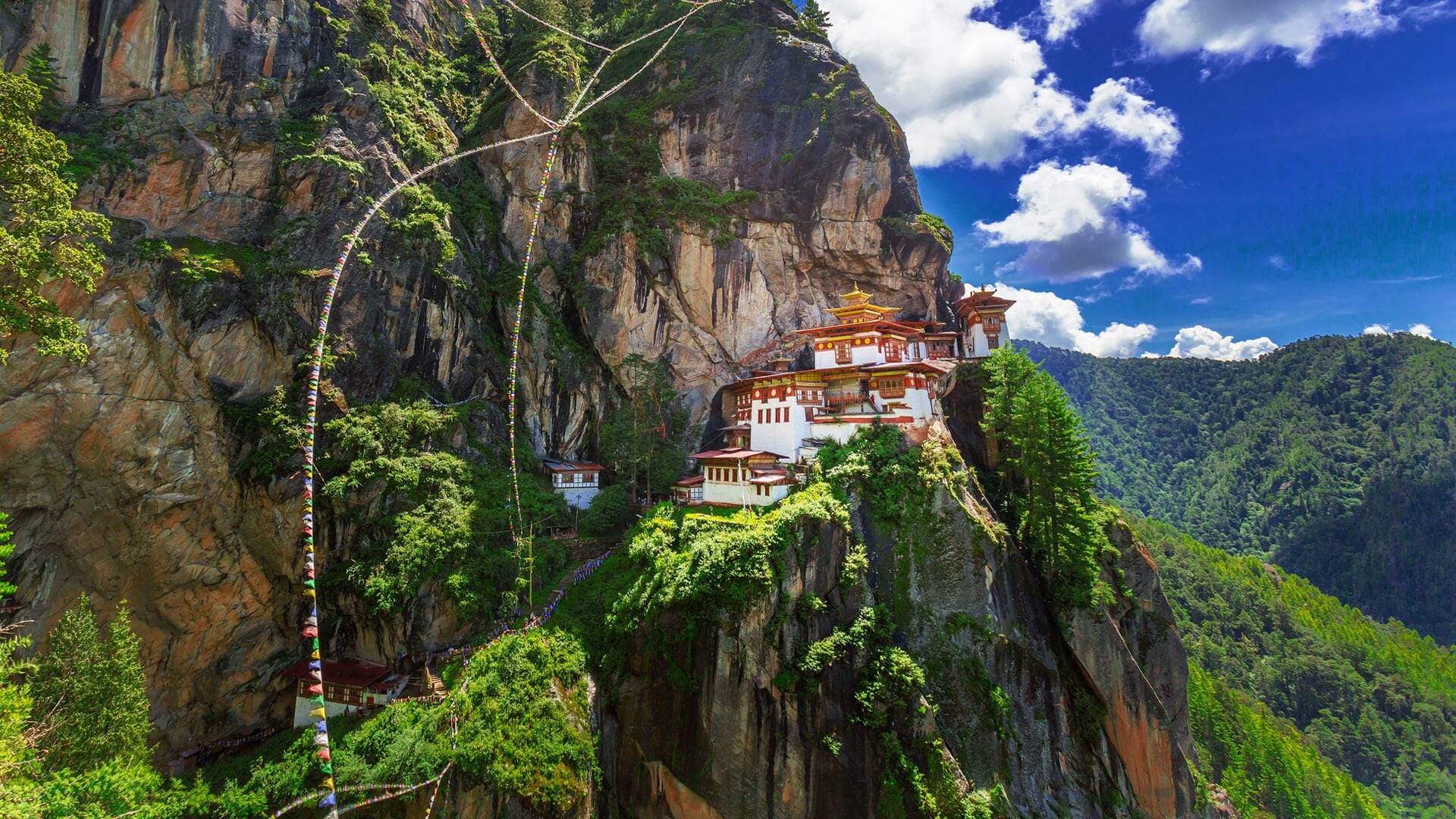
  • Excursion to Taktsang Monastery famously known as Tiger Nest.

Destinations

Thimpu Day 1-3
Punakha Day 3-5
Paro Day 5-7

The best time to visit

Paro throughout year
Thimpu throughout year
Punakha throughout year
Day 1
Day 01: Arrive Paro by Flight & transfer to Thimphu (55km, approx. 1.1/2-hour drive)

The flight to Paro is renowned as one of the most breathtaking journeys across the entire Himalayan region. Whether approaching along the majestic Himalayan range from Kathmandu or over the foothills from Kolkata, the route offers mesmerizing vistas and an exhilarating descent into the Kingdom of Bhutan. Upon disembarking, the first gift from Bhutan is its crisp, pristine mountain air. 

Once you've completed immigration procedures and collected your luggage, our representative will extend a warm welcome, presenting you with a traditional ‘Tashi Khaddar' – a white scarf symbolizing an auspicious reception for guests. 

Following this heartfelt greeting, you will embark on a road journey to Thimphu, Bhutan's capital town. The road takes you through the picturesque Paro valley, eventually leading to the convergence of the Paro and Thimphu rivers at a place called Chuzom. Here, three distinct styles of stupas—Tibetan, Nepalese, and Bhutanese—adorn the confluence. After a brief photo stop at Chuzom, continue onward to Thimphu. 

Upon arrival in Thimphu, check-in at the hotel. As Bhutan's capital and the hub of government, religion, and commerce, Thimphu blends modern development with ancient traditions in a unique manner. It remains one of the few capital cities globally without traffic lights. In the evening, take an exploratory stroll along Thimphu Main Street and through its bustling market area. Overnight stay at the hotel in Thimphu (Altitude: 2,320 m).
Day 2
Day 02: Thimphu

After breakfast, embark on a short drive to visit Buddha Dordenma, situated on a hill in Kuensel Phodrang Nature Park, commanding a panoramic view of the southern entrance to Thimphu Valley. This majestic statue fulfils an ancient prophecy dating back to the 8th century AD, discovered by Terton Pema Lingpa, a renowned Religious Treasure Discoverer. Believed to radiate an aura of peace and happiness worldwide, the bronze statue of Shakyamuni is gilded in gold and stands 51.5 meters tall, making it one of Bhutan's largest statues. Within the Buddha Dordenma are 125,000 smaller bronze statues of Buddha, each also gilded. The throne beneath the statue serves as a spacious meditation hall. 

Next, descend to visit the King's Memorial Chorten, where devotees continuously circumambulator, murmuring mantras and spinning prayer wheels. Conceived by Bhutan’s third king, His Majesty Jigme Dorji Wangchuk—known as "the father of modern Bhutan"—the landmark was constructed to embody his vision of global peace and prosperity. Completed in 1974 following his premature passing, the chorten stands both as a tribute to the Late King and as a symbol of peace. 

Then explore Centenary Farmers Market & Ka Ja Thom (local market Tue closed). Centenary Farmers Market, popularly known as Weekend market, is bustling, colourful market centre where farmers from different part of the country gather to sell their farm products. With its wide assortment of products including handicrafts and its picturesque and colourful setting, the Farmer’s Market is a favourite spot for many.

Next, proceed to Sangaygang Viewpoint, home to the transmitter tower of Bhutan Broadcasting Services (BBS). This captivating viewpoint is renowned among photographers for its panoramic vistas. On clear days, the hills are adorned with fluttering prayer flags, creating picturesque scenes that encapsulate the beauty of the Wang valley and offer perfect moments for photography. 

Descend to Pangri Zampa, a monastery constructed in 1529 by Lam Ngawang Chogyal, who migrated to Bhutan from Ralung in Tibet. Originally named Druk Phodrangding, meaning ‘The Castle of the Dragon’, it derived its name from a significant monastery in Tibet. Pangri Zampa houses a monastic school where Buddhist monks study Lamaism and astrology grounded in Buddhist principles. 

Wrap of your sightseeing of the day with visit to Trashichhoedzong. This is the center of government and religion, site of monarch’s throne room and seat of Je Khenpo or Chief Abbot. Built in 1641 by the political and religious unifier of Bhutan, Zhabdrung Ngawang Namgyal, it was reconstructed in 1960s in traditional Bhutanese manner, without nails or architectural plans. 

Evening time can be spent strolling through Thimphu city centre and local crafts bazaar, to browse through example of Bhutan's fine traditional arts. Here you can buy hand-woven textiles, thangka paintings, masks, ceramics, slate and wood carvings, jewellery, interesting items made from local materials. Overnight at the hotel in Thimphu. (Altitude 2,320 m)


Day 3
Day 03: Thimphu – Punakha (75 km, approx. 3 hours’ drive)

After breakfast, embark on a scenic drive to Punakha via Dochu La Pass, situated at an altitude of 3,088m (10,130 ft). Dochula Pass offers breathtaking views adorned with chortens, a mani wall, and prayer flags. On clear days, you might catch sight of majestic peaks such as Masagang (7,158m), Tsendagang (6,960m), and Gangkar Puensum (7,570m), the highest peak in Bhutan. 

At Dochula Pass, marvel at the Druk Wangyal Chortens, 108 stupas built by Ashi Dorji Wangmo Wangchuk, the Queen Mother. These chortens are arranged in three layers around the main stupa, symbolizing various spiritual concepts. 

Visit the Druk Wangyal Lhakhang at Dochula Pass, a temple dedicated to His Majesty the fourth Druk Gyalpo, Jigme Singye Wangchuck. The temple’s architecture blends historical elements with mythological symbolism, reflecting the visionary leadership of Bhutan. 

After experiencing nature’s splendour at Dochula pass, continue onto Punakha. Once the capital of Bhutan and the seat of government until 1955, Punakha still serves as the winter residence of the Je Khenpo, the chief abbot. Nestled in a temperate climate and blessed with natural drainage from the Pho Chhu (male) and Mo Chhu (female) rivers, the fertile Punakha valley yields abundant crops and fruits.

In the afternoon, explore Wangduephodrang Dzong, founded by Zhabdrung Ngawang Namgyal in 1638. Perched on a high ridge between the Punak Tsang Chhu and Dang Chhu rivers, this dzong commands panoramic views of the valley below. Historically significant, it was strategically located to safeguard routes to Trongsa, Punakha, Dagana, and Thimphu, solidifying its governor's position as one of Bhutan's most powerful leaders. 

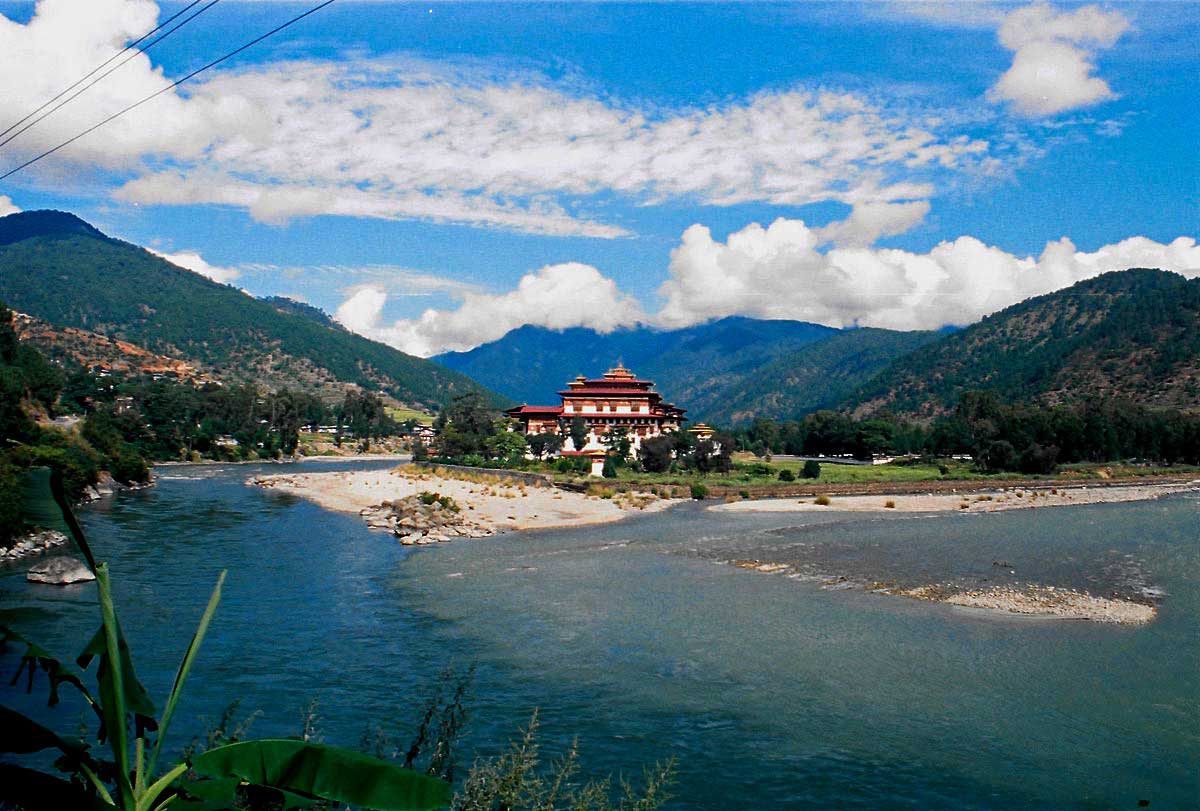
Continue your journey to Punakha Dzong, also known as the Palace of Great Happiness, built in 1637 by Zhabdrung Ngawang Namgyal at the confluence of the Phochu and Mochu rivers. This magnificent dzong served as both a religious and administrative centre in Bhutanese history. Its impressive dimensions and intricate architecture, including a six-story gold-domed tower, reflect the deep spiritual and cultural traditions of Bhutan. 

Then walk across Punakha Suspension Bridge, gracefully suspended over the gushing waters of the Mo Chhu River, is a marvel of engineering and a thrilling experience for visitors. Spanning approximately 160 meters, it ranks among Bhutan's longest suspension bridges and provides a unique perspective of the picturesque Punakha Valley. With prayer flags fluttering in the wind and the river's roar below, crossing this bridge offers an exhilarating blend of natural beauty and cultural significance. Overnight at your hotel in Punakha. (Altitude: 1,300m)


Day 4
Day 04: Punakha

After breakfast, embark on a short and easy walking excursion to Chimi Lhakhang, situated on a hillock in the centre of the valley, also known as the temple of fertility. It is widely believed that couples who do not have children and wanting one, if they pray at this temple, they are usually blessed with a child very soon. The trail leads across rice fields to the tiny settlement of Pana, meaning ‘field’. A walk through the village near the temple will give you rare glimpses into the daily life and lifestyle of the villagers. 

Afternoon excursion to Talo village. The village of Talo (altitude 2,800m) which is scattered along the hill slopes, known for its cleanliness and hygiene among Punakha villages. Talo Sangnacholing is built on a plateau and has majestic view of surrounding villages. The beautiful farmhouses of the village have its own flower gardens, and, on the hill, slope corns and sweet peas are grown in abundance. Take a stroll in this lovely village.

While return to town, on the way visit Sangchhen Dorji Lhuendrup Lhakhang Nunnery. Perched on a ridge amid pine trees and overlooking valleys of Punakha and Wangdue gleams Sangchhen Dorji Lhuendrup temple. It houses a 14-foot main bronze statue of Avalokiteshvara and of Guru Padmasambhava, Gautam Buddha, Zhabdrung Ngawang Namgyal, Tsela Namsum, the 21 Taras and Tsepamay (Buddha of longevity). The temple complex also houses a permanent higher learning and meditation centre for nuns where, apart from religious training, it provides life skill training such as tailoring, embroidery, statue making and thangka painting. Overnight at the hotel in Punakha / Wangdue (Altitude 1,300m).


Day 5
Day 05: Punakha – Paro (125 km, approx. 4.1/2-hour drive)

After breakfast, drive back to Paro descending back down from Dochu La. On the way visit handsomely proportioned Simtokha Dzong built in 1629 by Zhabdrung Ngawang Namgyal and modelled on Gyal Gyad Tshel Institute of Ralung (Tibet). Officially known as Sangak Zabdhon Phodrang (Palace of the Profound Meaning of Secret Mantras), Simtokha is often said to be the first dzong built in Bhutan. It is in fact also the oldest dzong to have survived as a complete structure. 

Then follow the way back up the dramatic Wang Chhu and Paro Chhu River valleys to Paro town. 

The beautiful valley of Paro encapsulates within itself a rich culture, scenic beauty and hundreds of myths and legends. It is home to many of Bhutan’s oldest temples and monasteries, National Museum and country’s only international airport. Mount. Chomolhari (7,314m) reigns in white glory at the northern end of the valley and its glacial water plunge through deep gorges to form Pa Chhu (Paro River). Paro is also one of the most fertile valleys in the Kingdom producing a bulk of the locally famous red rice from its terraced fields. 

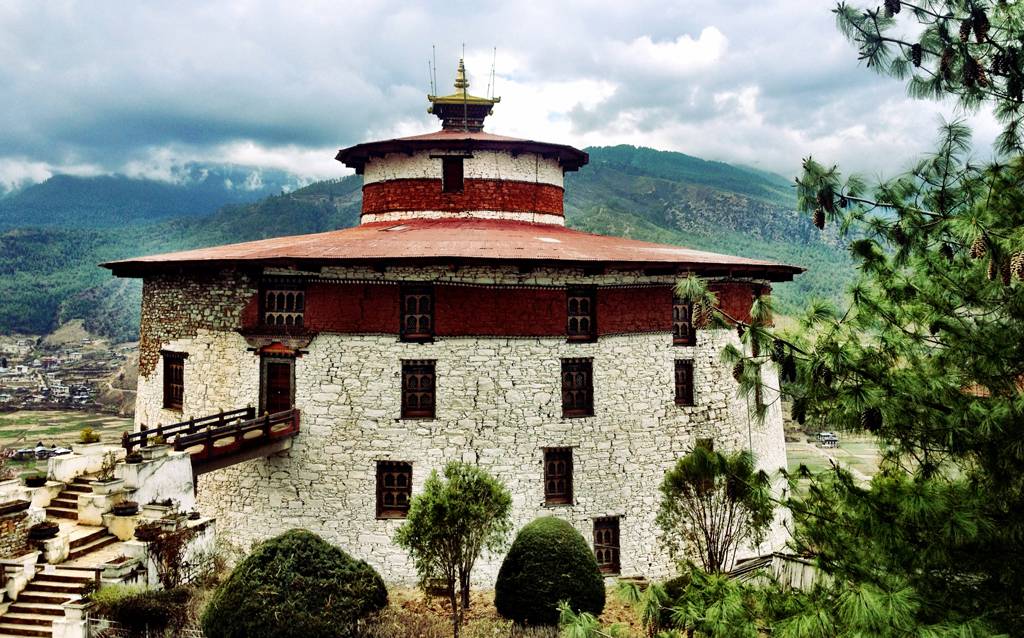
Later in the day, proceed to visit Ta Dzong, originally built as Watchtower, which now houses National Museum. The extensive collection includes antique thangka paintings, textiles, weapons & armour, household objects and a rich assortment of natural and historic artifacts. 

Then walk down the trail to visit Rinpung Dzong, meaning (“fortress of the heap of jewels”), which has a long and fascinating history. Along the wooden galleries lining the inner courtyard are fine wall paintings illustrating Buddhist lore such as four friends, the old man of long life, the wheel of life, scenes from the life of Milarepa. Mount. Sumeru and other cosmic Mandala. Overnight at the hotel in Paro (Altitude 2,280m).

Day 6
Day 06: Paro

After breakfast go for an excursion to Taktsang Monastery (approx. 5 hours round trip walk).  It is one of the most famous of Bhutan’s monasteries, perched on the side of a cliff 900m above the Paro valley floor. As per local legends Guru Rinpoche arrived here on the back of a tigress and meditated at this monastery and hence it is called ‘Tiger’s Nest’. This site has been recognized as a most sacred place and visited by Zhabdrung Ngawang Namgyal in 1646 and now visited by all Bhutanese at least once in their lifetime. 

On the way back to hotel, visit 16th century Kyichu Lhakhang, one of the oldest monasteries of the Kingdom associated with the introduction of Buddhism in Bhutan. Overnight at the hotel in Paro. (Altitude 2,280m).

Day 7
Day 07: Depart Paro

After early breakfast at the hotel, drive to Paro airport for a flight to your onward destination.

For more details, get in touch with one of our travel experts.

Download Our Catalogue

Explore exotic destinations and unique
travel experiences.